Thursday, May 10, 2018

Being Naked

From: www.istockphoto.com
It all started with our fertility treatments.  I had to get vaginal sonograms several times a month and inseminated regularly. This meant a number or people were regularly all up in my business. Then labor and childbirth for me was a naked experience. It just needed to happen that way... Then nursing. Nursing meant my body was no longer my own. Instead of nourishing me and thinking of me, my  body was doing everything it could to produce liquid gold for a baby who certainly thought my body was just an extension of his. This meant boobs out all hours of the day. And, the story continues... If I wanted to shower, like really shower without a screaming baby in the background, baby was in the tub with me. More than I care to admit, going to the restroom meant holding a baby on my lap.  Sometimes my opportunity to get dressed, or halfway into getting dressed, would be interrupted by an impending baby need. I know all of you moms can relate. Being naked is just a much bigger part of my life as a mom. 

My son has two older cousins. By older, I mean 2 and 3 years older. A year ago, when they were 1, 3 and 4 we would just throw them all in the tub together during family visits. They loved bath time. Bubbles and boats with cousins were precious memories. A year later, they were 2, 4 and 5 and without discussion, we no longer presented the option of cousin baths. The 5 year old was now concerned about modesty, closing the door, and very communicative about making sure people did see my son's business during diaper changes.

Growing up in my house modesty and privacy were taught at a very young age and enforced. I can't even remember bathing with my brother who is 14 months younger than me. My partner on the other hand grew up in a household of 9 siblings where modesty was simply not even technically possible. Still to this day, nakedness with her sisters is not even noticed.  

I know norms surrounding nakedness, boundaries and modesty are very different across the world? It can be attributed to culture or even family.  But, is it something that happens naturally? Does a family settle into a norm that moves and changes as children age and grow without conscious thought?  Or is it something thought out and planned? Do you directly correlate milestones and delineate by gender? 

When do you stop bathing with child? 
Is it a different rule for Moms vs. Dads?
When do siblings stop bathing together?
When is it no longer acceptable for your child to see you naked?
When is it no longer appropriate to see your child naked?
Do these boundaries even exist in your family?

I thought it would be fun to here what other moms have to see. I am sure there is a range that would be an interesting point for discussion. 

Monday, April 9, 2018

It takes time to make perfect.

Our first positive pregnancy test.
March 2015
 "It takes time to make perfect," became my pregnancy mantra.  I was so eager to conceive and had a schedule and plan set out, which of course... didn't happen. To piggy back off of my last post, trying to conceive can be hard. My story. I don't know if I have infertility issues per say. Not every fertility issues can even be diagnosed. However, our family is a same-sex household and we don't get the benefit of trying for free.  We also seem to take longer to get pregnant than the average fertility patient, so there are definitely challenges in conceiving.  Every pregnancy attempt is timed, medicated, monitored, and very expensive. I've been poked and prodded so far into one successful pregnancy.  It certainly takes the "fun" out of getting pregnant or eliminates the surprise/oops factor, but by no means takes the excitement away when it does happen.

Unfortunately in the US, fertility treatments are covered minimally for heterosexual couples, if at all, and not covered at all for single or same sex couples. That is a huge problem in my opinion. My son took nine attempts and is now lovingly referred to as our "community college baby" because he has already spent his college fund. Not really, but in reality, many things were just put on pause. Travel, buying clothes, restoring our home, replacing vehicles, buying anything nonessential, just became unimportant compared to making a baby.  Saving for a hopeful number two certainly puts our family in that same financial boat again. Any meal out is a potential round of one of the medications. It puts non essential expenses in an interesting light that is for sure.
5 weeks!
I've been fortunate enough that after attempting nine times that I did actually get pregnant and did not have a miscarriage. I could not imagine feeling the excitement and relief of finally getting a positive test, just to lose it a week, month or even 6 months into the pregnancy. I loved my baby before we even conceived with my entire heart. That type of loss would be immeasurable and it breaks my heart that it is such a heavy "secret" weighing on so many woman. You should know that most women (more than 85 percent) who miscarry are able to get pregnant again and give birth to healthy babies. Since most miscarriages occur totally randomly, having one does not increase your risk of experiencing a subsequent pregnancy loss (Source).

I share my story because I think as a woman who "struggles" to get pregnant, we can sometimes feel alone, frustrated, disheartened, or maybe even experience grief. I just wanted to reach out to others who have had a rocky path and share my mantra with you. "It takes time to make perfect."
Jessica Saurez Photography
http://www.jessica-suarez-photography.com/


Tuesday, February 20, 2018

Our Hidden Secret, Infant Loss and Infertility

Photo borrowed from http://www.saltycanary.com/infertility-update/

"Are you planning to have kids?" "Didn't you want to have more kids?" "Have you started trying yet?"

All of these are innocent questions that I am certainly guilty of asking. They are not bad questions. In fact, they are great conversation starters. But, these questions can have a little sting when directed to a family privately struggling with infertility or loss.  

"I'm pregnant!" "We weren't even trying."

These statements can also sting. Again, not bad things to say, but can indirectly remind a family that their path to parenthood wasn't or isn't as easy. To clarify, I guarantee they are genuinely happy for their friends and family who have conceived. Its just the fact that as a culture we have made infertility a secret battle that feels almost impossible to relate to. A secret pain that you alone are enduring and possibly even ashamed of... We talk openly about pregnancy, we recognize every prenatal milestone, but infertility is not talked about. 

Well, lets talk about it. 

1.5 million women between the ages of 15 and 44 are considered infertile today (Source).

Infertility affects about 12 percent of the reproductive-age population. In the United States, this includes 7.3 million women and their partners (Source). 

Among married women without children, 25 percent of those aged 35 to 39 were infertile (Source).

At least a million babies have been born in the U.S. using lab-assisted techniques (Source).

20% of pregnancies end in miscarriage (Source).

1 in 4 women have experienced the heartache of at least one miscarriage (Source).

My goal with this article was not to ask anyone to stop saying these statements, hide their pregnancy successes, or even create sympathy.... My goal was simply to give a voice to many woman's private battle.  I see you. We see you. It is your path to parenthood.  It is also your decision on how to get there.  Families privately battling their way to parenthood have given a great deal of thought to their options. Should we adopt, foster, seek fertility treatments, become super Aunts and Uncles or let nature decide? They probably have the most thought out and conscious path to parenthood in our society.  As a result, their choice must be honored and respected. 


Sunday, January 21, 2018

To vaccinate or not vaccinate, that is the question.

The more I learn about vaccines, the
more I have been rethinking my position.  For my son we determined we wanted to do a
delayed schedule. Our pure, healthy, clean little baby... I just didn't want to
put anything "bad" in his body just yet. We waited until he was a few
months old to start vaccinating and now he is currently up to date on all
vaccines as a toddler. I wasn't sure how to navigate the exemption process and
I was nervous that we could have issues with the state if we didn't
vaccinate. 
Since then, I have learned that the vaccine exemption for
philosophical purposes is very easy to complete and electing to not vaccinate for
philosophical purposes is much different than neglecting to follow-up on your
child’s wellness. I think that if we are ever blessed with a second child, I
will elect to only do very specific vaccines.

Here is why. Vaccines today in the US
have tons of additives.  It takes tons of
time and research to conclude all of the additives added to each manufactures
vaccine concoction.  However, this is a
copy and paste from the Center for Disease Control website of some of the “common”
additives:

“Common substances found in vaccines include:Aluminum gels or salts of aluminum which are added as adjuvants to
help the vaccine stimulate a better response. Adjuvants help promote an
earlier, more potent response, and more persistent immune response to the
vaccine.
Antibiotics which are added to some vaccines to prevent the growth of
germs (bacteria) during production and storage of the vaccine. No vaccine
produced in the United States contains penicillin.
Egg protein is found in influenza and yellow fever vaccines, which are
prepared using chicken eggs. Ordinarily, persons who are able to eat eggs or
egg products safely can receive these vaccines.
Formaldehyde is used to inactivate bacterial products for toxoid
vaccines, (these are vaccines that use an inactive bacterial toxin to produce
immunity.) It is also used to kill unwanted viruses and bacteria that might
contaminate the vaccine during production. Most formaldehyde is removed from
the vaccine before it is packaged.
Monosodium glutamate (MSG) and 2-phenoxy-ethanol which are used as
stabilizers in a few vaccines to help the vaccine remain unchanged when the
vaccine is exposed to heat, light, acidity, or humidity.
Thimerosal is a mercury-containing preservative that is added to vials
of vaccine that contain more than one dose to prevent contamination and growth
of potentially harmful bacteria. (SOURCE)”

Another adjuvant found in some specific
vaccines is peanut oil. Every wonder why in the past 50 years peanut allergies
have sky rocketed in the US specifically to the millions? It’s because some
vaccines use peanut oil as an adjuvant. This means when the immune system is
triggered to fight the introduction of the virus, it is also triggered to be
sensitive to peanuts.  Unfortunately, my
son has a life threatening allergy to peanuts now thanks to vaccines, but don’t
worry, he won’t get the chicken pox in kindergarten (insert eye roll here).
(SOURCE)
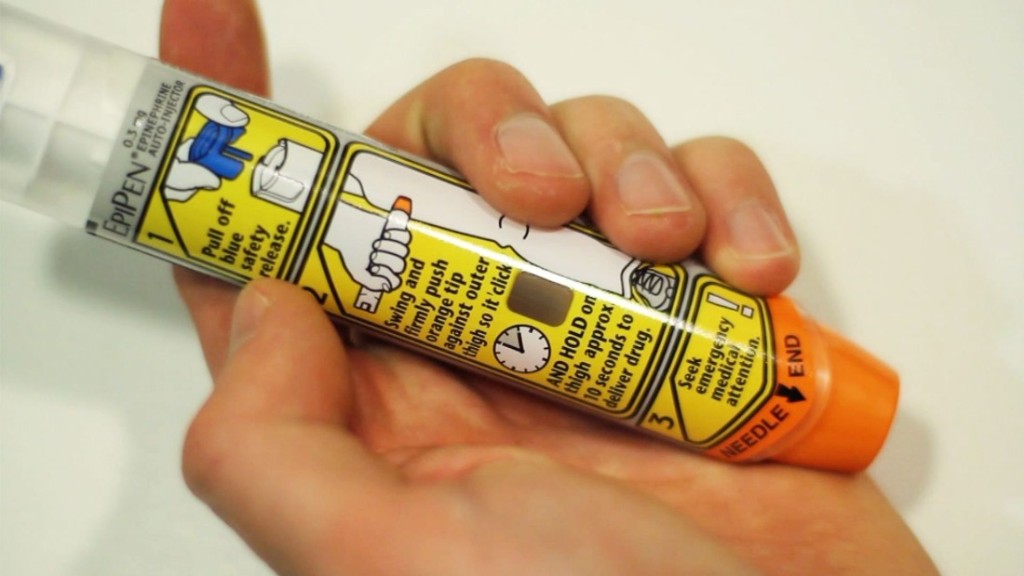
EpiPen: $300 to $630. Revenue rose to $2.69 billion in the first quarter of 2017 (SOURCE). 

“Vaccines cause immunity and hypersensitivity”
(SOURCE). So, the medical community has decided we will take the good with the
bad. This makes sense for life threatening or untreatable illness like say,
polio… but maybe not Hep B. The chance of your infant contracting Hep B is so incredibly
low and if he or she did, it is in fact treatable.  Also, let’s talk about the chicken pox. It is
not life threatening and in my opinion, it is kind of a rights of passage.  I of course would prefer that my child never
get sick, but being sick for 2-7 days in my opinion is a normal part of life
and development and preferable to living with a lifelong serious condition.

The sensitivity side effect of vaccines goes
even deeper. Anything introduced around the time of the vaccine (specifically
24 hours of injection), your child has a risk of forming sensitivity to. Some
children are more sensitive than others and some children have sensitivities
for longer periods than others and may even become allergies (like food
allergies).  Ever wonder why so many children
have a sensitivity to milk for 6 months and then “grow out of it.”  100 years ago babies had two choices, breast
milk (which had dairy in it from mother’s ingestion) or dairy directly. Now,
the number of children with dairy sensitivities is skyrocketing and that is
because on day of vaccine we feed our children dairy, and lots of it.

Introducing toxins into our body always has a
cost. If I as an adult told you I was going to eat aluminum, you would freak
out. Yet we think it is okay to shoot it into our baby’s blood stream. Yes, it
is a very small amount, but think…. It is introduced several different times
(2-3 shots every 2-3 months) during your child’s first two years on earth
and when they are at their most sensitive (due to the hypersensitivity caused
by vaccines). It has a long term lasting effect.  To quote the CDC again, aluminum has toxic
and tragic effects on the human brain and other organs (SOURCE). I mean, why
are we doing this?

Around the world, different countries view
vaccines differently. Many countries have made it illegal to use some of the
same additives as the US and thus have much lower rates of vaccine injury.  If I had the opportunity to do it over, I
would only vaccinate for life threatening, untreatable conditions and leave the
rest on the table.  

Friday, January 19, 2018

Activated Charcoal, My new favorite.

I feel like every few months, I get a new favorite natural remedy that I just obsess over.  It started with ACV (apple cider vinegar), then moved to passion flower, then coconut oil and so on.... I'm sure many of you can relate. My new obsession is activated charcoal. 

Regardless of your religious or spiritual views, we absolutely cannot deny the amazing gifts that our earth presents to us. We have the capability of healing and preventing nearly every element with clean living, but unfortunately with the way our modern international culture sustains itself, finding clean living or attempting clean living is increasingly more difficult. But back to my initial point, activated charcoal is certainly one of our earths natural gifts.

What is it? 

Activated charcoal is charcoal made from burned coconut shells, olive pits, bone char, peet, coal or sawdust. One of these ingredients is heated to a specific high temperature activating an important pore structure within the charcoal.


How it works.

Basically the pores of the charcoal act as a filter within your own body. Much like a water filter. Additionally, charcoal not only filters, it pulls and attracts toxins into its filter. "On a molecular level, the spinning electrons make activated charcoal highly electrical, putting out a negative ionic charge. The negative charge attracts positively charged substances such as toxins and poisons like a magnet (source). "

Our household has used it to whiten teeth and treat diarrhea, heartburn or constipation in both adults and toddlers. We also use it to purify both adult and babes blood and organs from toxins such as heavy metals.  The adults just take it in pill form, easy, but baby gets a dose in his milk mixed with honey. He loves it!  For topical uses, like teeth whitening or facial mask, go for it, but for ingestion, activated charcoal peaks its use at four weeks. So we do one month on and one month off to get its full benefits. 

You can go youtube binge crazy learning more on this goodie. So enjoy!  


Choosing the Right School

By Contributing Writer: Kim Wilhite of Oregon

We all want what is best for our children and choosing the right schooling is one of those things that will keep a mom up at night. When it came time for my oldest son to start kindergarten, I didn't know what to do or what was best for him. I looked into every option possible to make sure we were putting him in a school that met his needs, as well as our family's needs.
We felt it was very important to choose a school that was safe, had a low workload (little to no homework), a clean campus and small class sizes. Something else that weighed heavy on us was time. We wanted to be involved in our son's education and his daily life and didn't feel public school met that need for us. Sending him to kindergarten for 30 hours per week was daunting., I mean, this was the kid that got tired after playing for an hour at the park. I didn't want my little guy to be coming home exhausted and with 45 minutes of homework. I wanted to be able to play with him and teach him things.

So, the search began...

We looked at a private school, a Montessori school, a charter school and also considered homeschooling. We were pretty bummed when we toured the private school. The prices were high, while the campus was underwhelming.  The Montessori school seemed like a good fit for us because they offered the option to choose between three and five days per week attendance. We really liked the idea of being able to teach him for two days per week, while still being able to socialize him at school for the other three. Unfortunately, we were also disappointed when we toured the Montessori school. The campus was dirty and the classroom was complete chaos. Our son likes organization and learns better in a quiet and calm environment. The lack of structure at this school just wasn't a good fit. 

We were now left with the choice to home school or send him to a charter school. I wanted to home school over everything else, but I had this lingering feeling that he needed to be able to make friends and build a life outside of his parents and little brother (as hard as it would be to let him go). That is when I messaged a local mom group for advise on charter schools in the area. I also verbalized the idea that I was also considering homeschooling. 

I got a lot of recommendations! The one that stood out the most to me was a charter school that had a part time home school option. We went and checked it out and LOVED it! The in class days were Tuesdays and Thursdays, with the other days being left for the parent to home school. 

We decided to go all in and our son attended that school for two years. It was an amazing experience and we all learned a lot. The best thing for us was this school allowed us to be in control of our son's education. We had control of the homework load and what he learned/didn't learn. I would definitely recommend this option for parents who have time to home school, as you need at least 20 hours per week to teach and organize assignments. If you have more children, it obviously becomes more time consuming. 

Kaly Martin Photography 

Monday, December 18, 2017

5 Foods that Detox Heavy Metals

If you are anything like me, prevention is an important part of parenting.  I do vitamin C and zinc to prevent cold and flu, daily iron to prevent anemia, frequent socialization to prevent/reduce socialization anxiety, and the list goes on. Anything I can do to help my Little Bear have a solid start in life. So, as I continued to learn more about our every day exposure to toxic heavy metals and their sometimes irreversible effects, I started to explore possible prevention options.  Interestingly, I learned that heavy metal toxins can be purged from our body's very effectively thus eliminating any signs and symptoms of toxicity. It is only when heavy metals are left without monitoring, untreated, and allowed to build that the effects become tragic and irreversible. Great news right? I can monitor, I can treat, I can prevent build up.

Here are some of our regular go tos:

1. Cilantro - Cilantro naturally binds to metals and accelerates the excretion specifically of lead and aluminum. We hide cilantro in scrambled eggs with cheese or tacos. Also, while Cilantro does its job of binding effectively, it has to also exit before the metals has a chance to reabsorb into the body; therefore, increasing fiber or juice during cilantro meals helps to increase its effectiveness.

2. EPA, DHA and other fish oils - These are natural antivirals and great for protecting and nurturing a growing brain. Antivirals aid in detox. The difficulty however is that fish can be a major offender for exposing our bodies to metals. Instead, maybe look for a good multivitamin that has oils or really monitor the quality of the seafood you buy. 

3. Chlorella - Chlorella is a source of Chlorophyll, Protein, Iron, Magnesium, and amino acids, but it is primarily known as a detoxifying supplement.  It can be very powerful and in some cases can completely cure metal detox. However, it can very easily be overused. It is essentially a food (algae or seaweed). You can buy cereals that contain Chlorella but we use capsules. We mix a highly reduced dose in grape juice maybe 1-2x a month.   

4. Water - (filtered of course) Our water is another source of heavy metals, but filtered/purified water naturally flushes and purifies your body.

5. Garlic - Garlic is high in glutathione (detoxing qualities) and is an antiviral. We put garlic on everything and our Little Bear loves it. Also, the medical qualities of organic garlic cloves is much higher than say powdered seasoning. So this may be a motivation to take the extra step when cooking.  

https://draxe.com/7-proven-chlorella-benefits-side-effects/ 
These tips are meant as personal testimony and should not be taken in replacement of medical advise. If someone you love shows signs of metal toxicity, please seek professional attention to complete a supervised diagnosis and treatment (either holistic or medical). However, the above mentioned are purifying foods that we purposefully incorporate in our regular diet as our family's prevention plan. We hope it helps!   

Additional note: "Though generally considered safe, Chlorella comes with some cautions and warnings. It can contain moderate levels of iodine, so those with iodine sensitive thyroid conditions or iodine allergies should avoid it. Those with auto-immune disease should consult with a doctor first as it can increase immune function and may make these conditions worse." - https://wellnessmama.com/2719/chlorella-uses-benefits/